 Focus · Breaking Minute
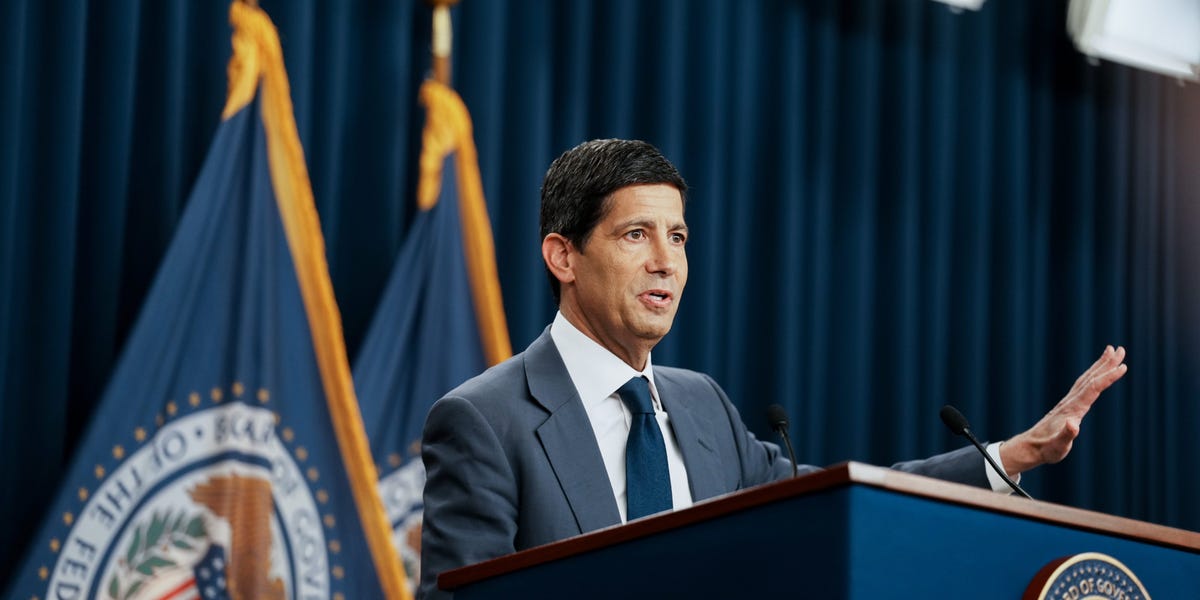
By William Edwards You're currently following this author! Click to unsubscribe from email alerts. Al Drago/Bloomberg via Getty Images Al Drago/Bloomberg via Getty Images 2026-11-06T18:06:11.304Z Markets were crushed this week by fears about what Democrats' wins in the midterms could mean for AI, but their landslide victory has implications for rates and monetary policy as well.
Prior to the election, rates were in focus as inflation and fiscal concerns sent yields soaring to nearly 25-year highs. Recent moves in the 10-year Treasury have reversed since Tuesday's vote, as the subsequent plunge in tech stocks sent investors running for the hill and into government bonds. In the immediate, the expectation is still for one more rate hike this year, especially on the heels of a strong October jobs report .
But what could Democratic victories mean for the Fed and rates over the longer-term? One narrative that has emerged after the election results came in is that the election result could end up pushing rates lower. That's not the conventional wisdom, as Democrats, with a greater willingness to spend on things like healthcare and entitlement programs, have been seen as bigger spenders than Republicans.
This time around, markets have treated the outcome of the midterms as a reason to believe the government could soon exercise more fiscal restraint. That was evident in a few ways in the immediate aftermath of the vote. For one, oil prices plunged on the idea that Democrats in control of Congress could mean the war in Iran soon ends.
Bond yields and the dollar dropped, as well. Meanwhile, a slower AI buildout could end up tamping down growth if things like data center construction slow, raising the possibility that lower rates from the Fed could be on the way to prop up the economy. Since Tuesday, yields on the 10-year Treasury have fallen 13 basis points to 4.83%.
"Little chance" of new fiscal stimulus Market pros are mixed on what Democrats' newfound power will mean for interest rates, but many point to downside on both ends of the Treasury yield curve. David Russell, Global Head of Market Strategy at TradeStation, told Business Insider on Thursday that Democrats' harsher stance on AI data centers could cause Treasury yields to fall. AI stocks plummeted on Wednesday as investors digested the results and what they might mean for data centers.
If AI spending and development pulls back, it could spell trouble for the economy, Russell said, which could spark a broader flight to safety into Treasurys, sending yields lower. Meanwhile, George Bory, the chief investment strategist for fixed income at Allspring Global Investments, said that view of fiscal tightening is probably correct, and yields are likely heading lower. "Expect fiscal tightening in 2027 versus 2026 with little chance of new fiscal stimulus while capex depreciation, tariffs, and defense spending likely come under heightened scrutiny," Bory said.
"Higher taxes are unlikely in the near term, but Dems may start to lay the groundwork for 2028. The deficit could shrink next year which would be good for bond investors." If the fiscal picture improves, it becomes less of an input for the Fed in determining the path of interest rates, said Preston Caldwell, a senior US economist at Morningstar. "The Fed, they adjust interest rates to offset demand side shocks, and the main one that comes from the government is changes to fiscal policy," Caldwell told Business Insider in an interview on Thursday.
But not everyone agrees with the idea that government spending be pared. Gene Tannuzzo, Columbia Threadneedle's global head of fixed income, said that some additional spending is possible on issues that Democrats and Trump agree on. For example, Congress could try to reverse medicaid cuts or extend CHIPS Act subsidies that are due to expire.
"These items both increase deficits at a time when the Treasury market is vulnerable," Tannuzzo said. "This could steepen the curve and push long-term rates up." Read next Business Insider tells the innovative stories you want to know Business Insider tells the innovative stories you want to know Business Insider tells the innovative stories you want to know Business Insider tells the innovative stories you want to know William Edwards You're currently following this author! Click to unsubscribe from email alerts.
William Edwards is a senior investing reporter at Business Insider, primarily covering the US stock market and the broader economy. He's interviewed some of the most influential voices in the market, including Joseph Stiglitz , Jeremy Grantham , Rick Rieder , Rob Arnott , Savita Subramanian , Nouriel Roubini , Ken Rogoff , Mike Wilson , Claudia Sahm , Albert Edwards, Andrew Ross Sorkin , Ben Snider , and more. William created BI's annual Oracles of Wall Street list ( 2023 , 2024, 2025 ), highlighting top calls from strategists, economists, and analysts.
He also launched its Investor of the Month series. Further, William writes BI's Where to Invest $10,000 column, and contributes to the First Trade newsletter. Prior to Business Insider, William covered the US economy for Bloomberg News in Washington, DC and contributed to TV tech coverage for CNBC in San Francisco.
He has also spent time studying or reporting in France, Germany, and Tunisia. He is based in New York. Investing Interest Rates
Source: Business Insider